What does SDA mean for Brisbane participants comparing housing options?
Specialist Disability Accommodation is for a small group of NDIS participants with very high housing support needs. Here is what Brisbane families should check before comparing SDA options.
Direct answer: what SDA means
Specialist Disability Accommodation, or SDA, is NDIS-funded housing for a small group of participants who need a home with specialist design features because of extreme functional impairment or very high support needs. It is about the physical dwelling: the layout, access, technology, safety features and enrolment of the home. It is not the same thing as the daily support delivered inside the home.
That distinction matters for Brisbane participants and families comparing housing options. A person may need Specialist Disability Accommodation, Supported Independent Living, in-home supports, assistive technology, home modifications, or a mix of supports. The right path depends on the participant's goals, current plan, evidence, support needs, and whether the dwelling itself needs specialist features.
Why SDA is different from ordinary housing
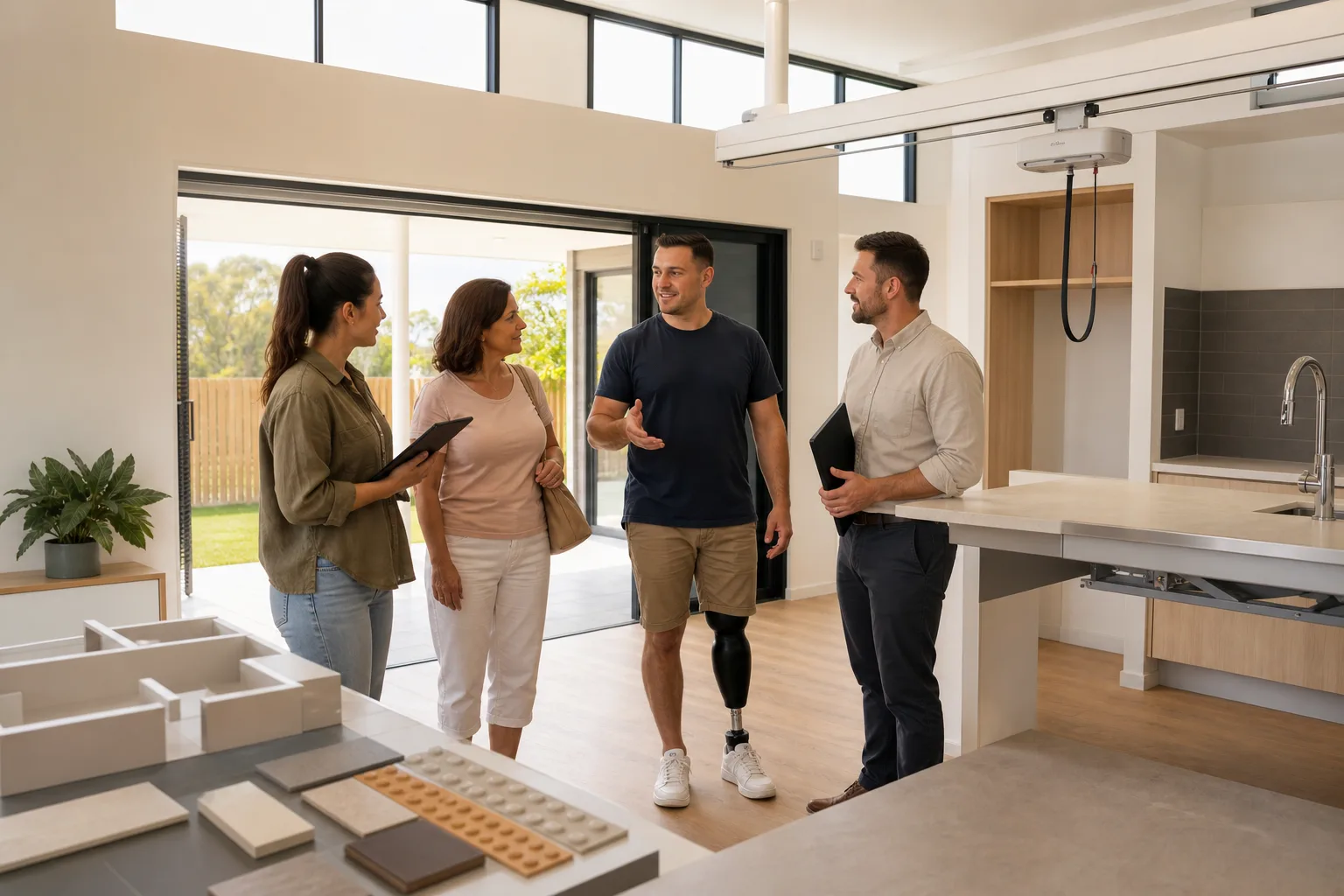
The NDIS describes SDA as housing designed for people with extreme functional impairment or very high support needs. SDA homes may include features such as wider doorways, wheelchair-accessible kitchens, ceiling hoist provisions, automation, robust materials, safer bathroom layouts or other design features that allow supports to be delivered more safely.
In practical terms, SDA is not a promise of a particular vacancy or a shortcut around the NDIS decision process. Queensland Government housing guidance also makes the point clearly: you must be approved for SDA through the NDIS, and no other provider can decide that you are eligible or will be approved. A provider can explain their service, discuss current housing pathways and help you understand what to ask next, but the funding decision sits with the NDIA.
The four SDA design categories
When families start comparing SDA, it helps to know the four design categories used by the NDIS. These categories describe the design response the dwelling is built around:
- Improved liveability: housing with better visibility, layout and design features for people with sensory, intellectual or cognitive disability.
- Fully accessible: housing with a high level of physical access for participants with significant physical impairment, including wheelchair access needs.
- Robust: housing designed with strong, durable materials and layouts that reduce risk and maintenance where complex behaviours are part of the person's support profile.
- High physical support: housing with features for very high physical support needs, such as structural readiness for ceiling hoists, assistive technology, backup power or home automation.
These labels are not marketing descriptions. The SDA Design Standard sets detailed requirements for new and newly refurbished SDA dwellings. For a Brisbane participant, the useful question is not simply "is it SDA?" It is "does the design category, building type, location and support arrangement match the plan and day-to-day support needs?"
SDA, SIL and support workers are separate
A common point of confusion is the relationship between SDA and SIL. SDA funding is for the specialist home. SIL funding is for the regular support workers who help with daily living in the home. The NDIS notes that many participants living in SDA also have in-home supports such as SIL, but they are separate supports with separate purposes.
This is why a housing conversation should include more than the house. If a person is comparing a Brisbane or North Brisbane SDA pathway, they may also need to discuss daily routines, overnight support, personal care, medication prompts, transport, behaviour support, communication needs, assistive technology, community access and how the provider will coordinate with the participant's chosen support network.
For Tibii enquiries, the practical internal pathway is usually to start with the SDA service page, review current housing pathways through Tibii homes, and use support coordination where plan navigation, provider comparison or evidence preparation needs more structure.
What to check before comparing SDA providers
Before contacting providers, gather the details that make the comparison meaningful. Useful questions include:
- Does the participant's plan include SDA, and does it specify a design category, building type, location or other conditions?
- Is the dwelling enrolled as SDA and offered by a registered SDA provider?
- What daily support will be delivered in the home, and is that separate from the dwelling agreement?
- How will the provider protect participant choice if the housing provider and support provider are connected?
- What rent contribution, utilities and ordinary living costs will the participant be expected to pay?
- What service agreement terms, exit process and maintenance responsibilities apply?
- How will the home support privacy, communication preferences, visitors, cultural needs, housemate matching and routines?
The NDIS Commission's SDA Practice Standards focus on rights and responsibilities, conflict of interest, service agreements, enrolment of SDA properties and tenancy management. That means provider choice is not only about floor plans. It is also about clear agreements, participant choice and control, and how the provider manages the dwelling relationship.
How Brisbane families can use the SDA Finder carefully
The NDIS SDA Finder can help participants search vacancies by location, building type, design category, number of residents and price. It is a useful starting point, but it is not the whole market and it is not an endorsement of a provider. The NDIS advises participants to discuss suitability with a planner, support coordinator or local area coordinator and to check whether the dwelling meets their needs before committing to a service agreement.
For a Brisbane search, that means matching the plan to the actual home. A vacancy might look suitable because the suburb is convenient, but the design category, housemates, support model, provider agreement or daily routine may not fit. The safer process is to compare location, design, support delivery, tenancy terms and transition planning together.
Where Tibii fits in the Brisbane housing pathway
Tibii supports people in Brisbane, Banyo and North Brisbane. The Brisbane NDIS provider page connects housing, respite, in-home support, support coordination and high-intensity supports to one local enquiry path. The SDA page supports participants and families who are trying to understand whether the physical home, daily support, or both need to change.
If you are comparing options now, avoid asking only "do you have SDA?" Ask what the home is designed for, what support is separate, what evidence is needed, whether the provider is registered for SDA, how rent and service agreements work, and what happens if the person wants a different support provider inside the home.
For a practical next step, gather the participant's plan details, current living barriers, preferred location, design needs, support routines and decision-makers, then contact Tibii to discuss whether the enquiry belongs in SDA, SIL, in-home support, support coordination, or another housing pathway.
Key takeaway
SDA is specialist housing, not a general accommodation label and not the same as SIL. For Brisbane participants, the strongest comparison starts with the NDIS plan, checks the design category and registration requirements, separates the dwelling from daily supports, and keeps participant choice at the centre of every housing decision.
Back to Tibii Blog | Contact Tibii — 1300 736 731