SDA, SIL or in-home support in Brisbane: how to compare pathways
Compare SDA, SIL and in-home support pathways in Brisbane, using official NDIS guidance to understand housing, daily support, evidence and next steps.
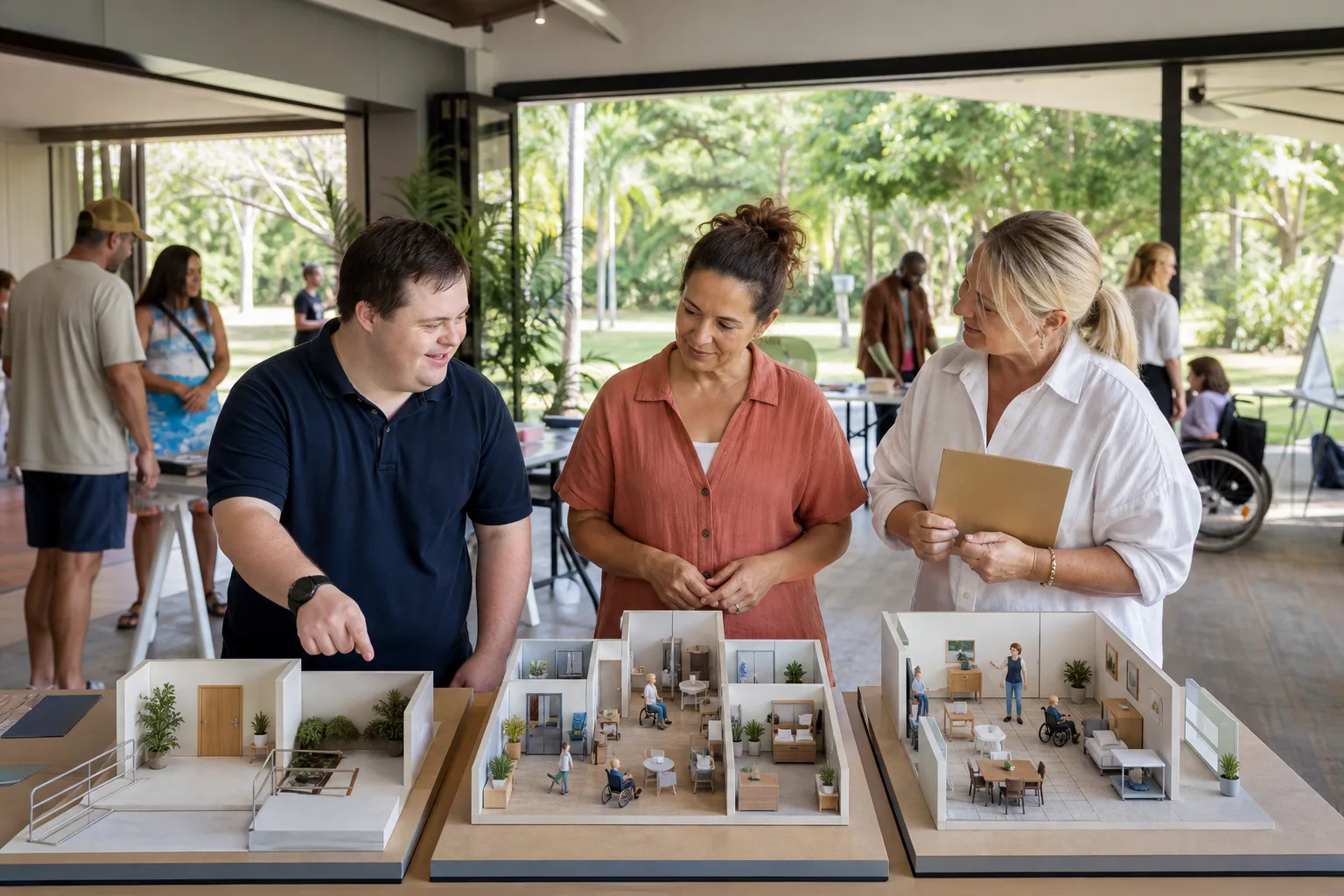
Direct answer: compare the support first, then the house
For Brisbane participants and families, the easiest way to compare SDA, SIL and in-home support is to separate three questions: where will the person live, what daily support do they need, and what evidence shows that need? Specialist Disability Accommodation is about the physical dwelling. Supported Independent Living is about paid support workers helping with daily life in the home. In-home support is usually more targeted help with routines, personal care, community access or daily tasks while the person remains in their current home or another ordinary housing setting.
These pathways can overlap. A participant may have SDA and SIL together, or may use in-home support before their needs reach a 24 hour support model. The right next step is not the option with the most complicated name. It is the option that matches the participant's goals, current plan, safety needs, informal supports, housing situation and professional evidence.
Start with the current living goal
The NDIS home and living guidance says different supports may be funded to help a participant live more independently, but rent, groceries, utilities and most everyday living costs remain separate from NDIS funding. That distinction matters in Brisbane, where families may be comparing private rental, public or community housing, living with family, a share home, SDA, or another arrangement.
A useful first question is: what is changing? If the person wants to stay at home but needs help with morning routines, meals, personal care or getting into the community, a targeted in-home support conversation may be enough. If the person needs support across the day and night, especially in a shared living arrangement, SIL may need to be explored. If the ordinary home itself cannot safely meet the person's disability-related needs, SDA or home modifications may need to enter the conversation.
When in-home support may be the better first pathway
In-home support can suit a participant who has a stable place to live but needs practical support to complete daily tasks. The NDIS describes core supports as funding that may help with everyday tasks such as cleaning, cooking and personal care, depending on the participant's goals and plan. The NDIS home and living guide also describes Assistance with Daily Life as support for everyday tasks at home, such as cooking, cleaning or personal care.
For Brisbane families, this pathway can be useful when the participant does not need support all the time, when family or informal supports remain part of the routine, or when the main goal is building independence in the current home. It can also help clarify whether support needs are increasing before a larger housing request is made. Tibii's Brisbane in-home support and personal care support pages are the most relevant internal next steps for this pathway.
When SIL may need to be explored
SIL is not the house itself. NDIS participant guidance explains that SIL is funding for support workers, and that SDA is the housing. SIL is designed to help a person live as independently as possible while building skills, and it may be relevant where someone needs a level of support across the whole day. The NDIS also notes that SIL cannot be used for rent, groceries or other day-to-day expenses.
In practice, a SIL discussion often needs more detail than a general provider enquiry. Families should be ready to describe the ordinary week: personal care, meal preparation, overnight support, supervision, behaviour support plan implementation if relevant, community routines, medication prompts, appointments, safety risks and what the person can already do independently. A support coordinator can often help compare providers and translate plan goals into practical questions. Tibii's support coordination page is a useful companion link where families need help joining the pieces.
When SDA enters the conversation
SDA is a more specific housing pathway. NDIS guidance describes SDA as housing for people with extreme functional impairment or very high support needs, with features that may include wider doorways, wheelchair-accessible kitchens, ceiling hoist provisions, home automation or robust materials. SDA does not include personal care, SIL, ILO or assistive technology; it is the specialist dwelling.
This means an SDA conversation should not be treated as a general vacancy hunt only. The participant needs evidence that explains why other home and living supports or ordinary housing arrangements do not meet their disability-related needs. If SDA is in the plan, the location, building type and design category usually need to align with that plan. Tibii's SDA page, homes directory and Brisbane NDIS provider page can help families frame local questions before speaking with providers or their NDIS contact.
A Brisbane comparison checklist
- Choose in-home support when: the person has somewhere suitable to live and needs targeted help with daily tasks, personal care, skill-building or community routines.
- Explore SIL when: the person needs frequent or 24 hour support from workers at home, possibly in a shared living arrangement, and the support model needs to be planned across the week.
- Explore SDA when: the ordinary dwelling is the barrier and the person may need a specialist enrolled home because of very high support needs or extreme functional impairment.
- Ask about support coordination when: the plan, evidence, provider options or transition steps are becoming hard to compare.
- Keep housing costs separate: NDIS support funding is not the same as rent, bills, groceries or everyday household costs.
What evidence helps the decision
The NDIS guidance on asking for home and living supports recommends making a list of disability-related support needs, goals, informal and community supports, and the daily tasks the participant needs help with. It also says evidence should explain daily support and housing needs, what the person can and cannot do because of disability, and what other options have already been explored.
For a Brisbane provider conversation, that evidence can be turned into plain questions. What does a safe morning routine require? What support is needed overnight? Can the person access the bathroom, kitchen, entry and transport safely? Would targeted in-home supports address the risk, or is the dwelling itself unsuitable? Has the person tried short periods away from home or a different support routine? What informal support is still reliable, and what is no longer sustainable?
Quality and safeguards questions to ask
As of July 2026, the NDIS Commission says SIL providers need to register and comply with new supported independent living Practice Standards. The Commission also says there are no changes to SDA registration requirements, and that the interaction between SIL and SDA arrangements can affect a person's ability to change living arrangements. Families should ask how a provider protects choice and control, how complaints are handled, how support changes are reviewed, and how the provider separates housing questions from support-worker questions.
Queensland Government housing material also points families toward broader housing options, including private rental, public and community housing, SDA, and living with family or housemates. That is a useful reminder that an NDIS provider conversation should sit beside, not replace, housing advice, tenancy advice, NDIS plan discussions or professional evidence.
Next step for Brisbane families
If you are comparing these pathways now, start with the least confusing question: what needs to be different for the person to live safely and with more independence? If the answer is daily routine help, start with in-home support. If the answer is a planned support-worker model across the day and night, explore SIL. If the answer is that the home design itself is not suitable, explore SDA or home modifications with the right professional evidence.
Families can use Tibii's Brisbane service pages to prepare questions, then speak with their my NDIS contact, support coordinator or treating professionals about the evidence needed for any plan change. For a local conversation, use the contact page and explain whether you are asking about in-home support, SIL, SDA, support coordination, or an early comparison of all three.
Official sources used
- NDIS guide to home and living options
- NDIS guidance on asking for home and living supports
- NDIS supported independent living guidance
- NDIS specialist disability accommodation guidance
- NDIS Commission supported accommodation guidance
Back to Tibii Blog | Contact Tibii — 1300 736 731