What does a support coordinator do under the NDIS?
A practical Brisbane guide to what NDIS support coordinators help with, when they are useful, and what to ask before choosing one.
Direct answer
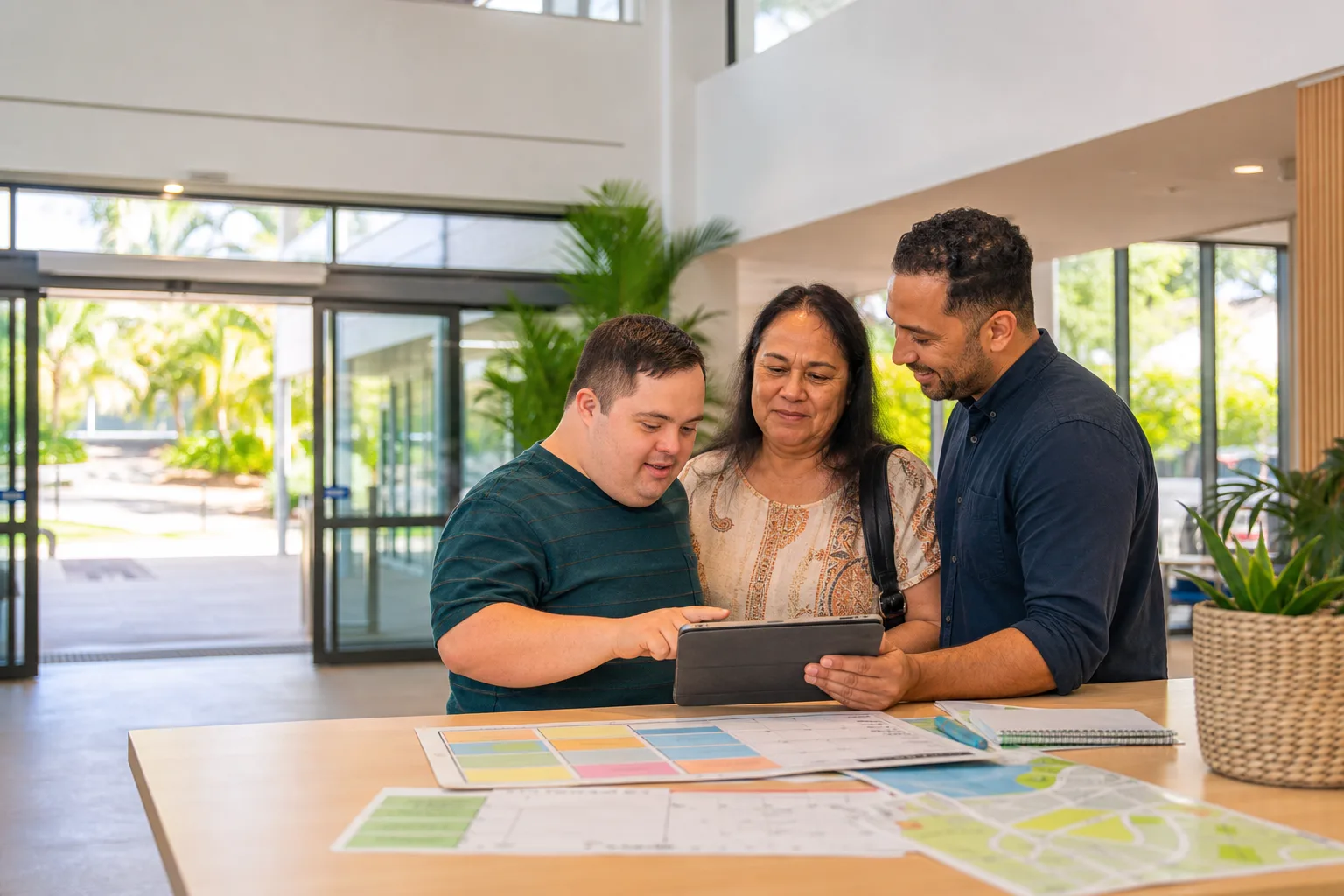
An NDIS support coordinator helps a participant understand their plan, connect with the right supports and build confidence to manage services over time. They are not there to make decisions for the participant. A good coordinator should explain options clearly, help the participant compare providers, support practical service setup and keep the plan moving toward the participant's own goals.
For people in Brisbane, Banyo and North Brisbane, support coordination often becomes useful when several supports need to work together. That might include daily personal care, community access, short-term respite, Supported Independent Living, therapy providers, mainstream services and plan review preparation. The role is practical: turning a plan into a working mix of supports without taking choice and control away from the participant.
What support coordination is for
The NDIS explains support coordination as help to use a plan effectively. In plain language, this means helping a participant understand what is funded, what each budget can be used for, how providers fit together and what to do when supports are not working well.
A support coordinator may help with:
- understanding NDIS plan budgets and support categories
- finding and comparing suitable providers
- setting up service agreements and provider relationships
- connecting with community, mainstream and government services
- checking whether current supports are helping the participant move toward their goals
- planning for changes, gaps, risks or things going wrong
- building the participant's skills to coordinate more of their own supports over time
This is different from plan management. A plan manager mainly helps with provider invoices, claims and budget tracking. A support coordinator focuses on the support mix itself: which supports are needed, who provides them, how they work together and whether they are helping in real life.
The three levels of support coordination
NDIS guidance describes three levels that may be funded depending on a participant's goals, needs and situation. Not every participant has support coordination in their plan, and the right level depends on the plan and circumstances.
- Support connection: help to understand the plan, build confidence and connect with community and mainstream supports.
- Support coordination: more ongoing help to build skills, manage relationships, coordinate supports and increase independence.
- Specialist support coordination: a higher level of support for more complex situations where consistent services and barrier resolution are needed.
If a participant is unsure whether support coordination is funded, they should check their plan, speak with their my NDIS contact or ask a trusted nominee or advocate to help them understand the plan language before choosing a provider. The NDIS also explains that support coordination funding is usually included for a set amount of time, because the aim is to build a participant's confidence and capacity to coordinate supports more independently where that is possible.
How a support coordinator helps a plan work
The most useful support coordination is not just a list of provider names. The NDIS provider guidance says support coordinators help participants connect with NDIS providers, community, mainstream and other government services in line with the participant's goals and plan. That means the coordinator should look at the whole support environment, not only one service.
For a Brisbane participant, that might mean helping personal care, community access and respite providers understand routines and communication preferences. It might mean coordinating with a housing provider when someone is exploring Supported Independent Living, or helping a family prepare questions before discussing NDIS respite. It may also involve helping a participant compare local options on the Brisbane support coordination pathway and understand when to contact a service directly.
A coordinator should also help the participant notice when supports are not working. This can include reviewing whether services are delivered as agreed, whether the plan budget is being used sensibly, whether goals are progressing and whether the participant has enough information to choose a different provider if needed.
Finding a support coordinator in Brisbane
The NDIS suggests researching support coordinators and using the NDIS provider finder to search by suburb or postcode and by the relevant support coordination level. It also says participants choose their support coordinator and can change support coordinators at any time, without waiting for the current plan to end. For a local search, families can compare public service pages, contact pathways, response quality and whether the provider can clearly explain their approach.
Helpful questions include:
- What level of support coordination do you provide?
- How will you help me understand my plan and budgets?
- How do you support choice and control when comparing providers?
- How do you avoid conflicts of interest if your organisation provides other supports?
- What do you charge, and what is your cancellation policy?
- Have you supported people with similar goals, communication preferences or support needs?
- What does the first meeting include?
- How will you communicate with me, my nominee or my family?
- How do you prepare for reports, check-ins and plan reassessments?
- What happens if I want to change support coordinators?
These questions matter because support coordination sits close to participant choice. A coordinator should make options clearer, not narrower.
Request for service, first meeting and service agreement
Where support coordination or recovery coach funding is in a plan, NDIS provider guidance describes a request for service process when a participant chooses a preferred provider. After a provider accepts a request, the first meeting should help clarify goals, needs, expectations and the service agreement. A service agreement should make clear what both the participant and provider have agreed to.
Participants and families should not feel rushed through this step. The first meeting is a chance to talk through the plan, communication preferences, current supports, urgent risks, cultural considerations, informal supports and what the participant wants to change. In Brisbane and North Brisbane, local context may also matter: transport, provider availability, home routines, community access preferences and whether supports need to coordinate around school, work, respite or housing.
Reporting and plan review preparation
Support coordination also has a reporting side. The NDIS describes support coordinator reports such as initial plan implementation reports, mid-term reports and plan reassessment or evaluation reports. These reports help the NDIA understand how the plan is going and whether supports are helping the participant meet their goals.
Good reporting should not be a surprise document written without the participant's understanding. The participant should know what information is being included, what progress or barriers are being described and what future support needs are being recommended. This is especially important when a plan has complex support needs, housing goals, changing family circumstances or gaps in services.
Quality and conduct expectations
All NDIS providers and workers need to take participant rights, safety and ethical conduct seriously. The NDIS Commission Code of Conduct applies to registered and unregistered NDIS providers, key personnel and workers. For support coordination, this matters because the role often involves sensitive information, provider recommendations and decisions that affect daily life.
Participants should expect clear communication, privacy, respect, transparent pricing and a willingness to act when something is not right. If a coordinator is part of an organisation that also provides other services, the participant can ask how provider choice is protected and how any potential conflict is managed.
Where Tibii fits
Tibii's support coordination service can help Brisbane and Queensland participants turn plan goals into practical provider conversations, service setup and review preparation. If you are looking locally, the dedicated Support Coordination Brisbane page explains how this support can fit alongside broader NDIS Provider Brisbane services.
If you are comparing providers, start with the plan and the participant's goals. Then use the first conversation to test whether the provider can explain support coordination plainly, respect choice and control, and connect the plan to real supports in Brisbane, Banyo or North Brisbane. To ask Tibii about next steps, use the contact page or call 1300 736 731.
Back to Tibii Blog | Contact Tibii — 1300 736 731