What are high-intensity supports under the NDIS?
High-intensity supports can help NDIS participants with complex daily personal activities. Learn what they can include, what to ask providers, and how to plan safely in Brisbane.
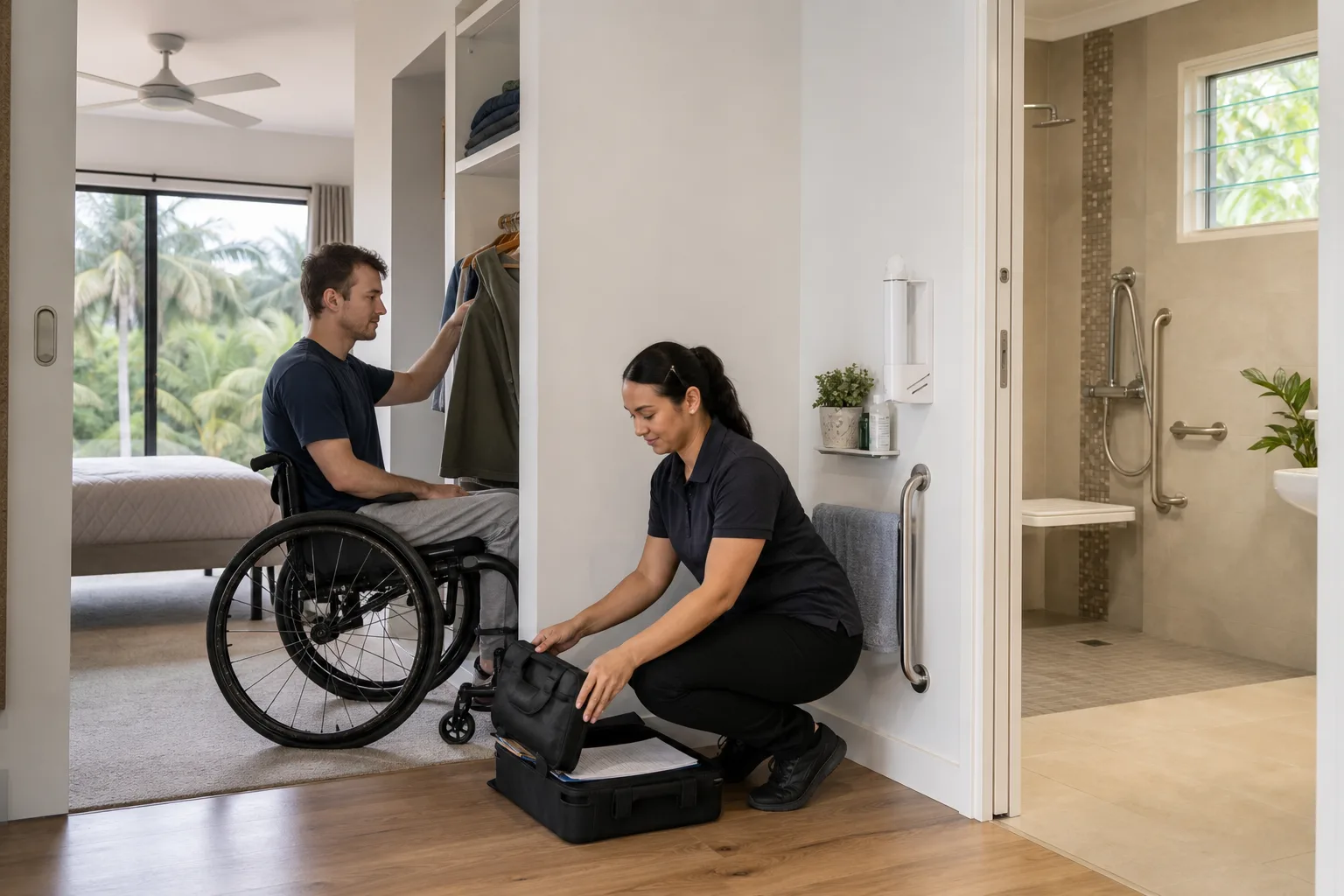
Some NDIS supports are straightforward daily assistance. Others need more planning because the task is personal, complex, higher risk, or linked to a participant's disability-related health needs. Those supports are often described as high-intensity supports or high-intensity daily personal activities.
This guide is written for participants, families and support coordinators in Brisbane, Banyo and North Brisbane who are comparing providers or preparing a referral. It explains what high-intensity supports can include, what good planning should cover, and what to ask before support starts. It is general information only, not medical advice, legal advice or a guarantee that a support will be funded in a participant's NDIS plan.
Short answer: what are high-intensity supports?
High-intensity supports are NDIS supports for participants with complex daily personal activity needs that require workers with the right skills, training, supervision and procedures for the specific task. They are not just ordinary personal care with a different label. The difference is the level of risk, the person's individual needs, and the worker capability required to deliver the support safely and respectfully.
The NDIS describes high-intensity daily personal activities as supports that help a participant with complex needs undertake daily personal activities. Official guidance also says these supports need a worker with additional qualifications and experience relevant to the participant's complex or psychosocial needs.
For a local provider, that means the conversation should be practical. What task is required? When does it happen? What written plan exists? Who trained the worker? What should the worker do if something changes? A provider should be able to answer those questions before a roster is treated as ready.
What high-intensity supports can include
The NDIS Commission's high-intensity support skills descriptors point to a range of supports that may require extra knowledge and safeguards. Examples can include complex bowel care, enteral feeding support, dysphagia support, ventilation support, tracheostomy support, urinary catheter support, subcutaneous injections, and wound or pressure injury support.
Not every participant will need those supports, and not every provider will deliver every high-intensity task. The support should be matched to the participant's plan, preferences, risks, daily routine and any professional guidance already in place. If behaviour support or restrictive practices are involved, specialist behaviour support rules may also need to be considered separately.
Tibii's high-intensity support page describes this as planned support for complex disability-related health, behaviour or personal-care needs. If the support need is mainly routine personal care without those additional task-specific requirements, Tibii's in-home personal care and daily living support page may be the better starting point.
How high-intensity support differs from general daily support
General daily support can include help with showering, dressing, meals, household routines and community access. High-intensity support may happen in similar daily settings, but it needs clearer safeguards because the task can carry more serious consequences if it is done incorrectly or if changes are missed.
For example, a general morning routine might focus on timing, choice, privacy and independence. A high-intensity routine may also need a participant-specific support plan, worker competency checks, clear escalation steps, regular review, and evidence that workers understand the exact task they are delivering. The goal should still be dignity and choice, not a clinical or institutional feeling in the person's home.
The NDIS Commission says the skills descriptors explain the skills and knowledge expected when competent workers deliver these supports and are not qualified health or allied health practitioners. In practice, families and coordinators should ask how training happens, who signs workers off for the task, and how the provider keeps the plan current.
Questions to ask a Brisbane high-intensity support provider
Before choosing a provider, ask direct questions that reveal whether the service is ready for the actual task, not just available on a brochure.
- What exact support tasks can you safely deliver? Ask whether the provider has experience with the specific support need, and whether any tasks are outside their current scope.
- What plan or professional guidance do workers follow? For higher-risk supports, workers should not be relying on memory or informal verbal instructions alone.
- How are workers trained for this participant's needs? Training should be relevant to the individual task and the person's routine, communication, preferences and risks.
- What happens if something changes? Ask about escalation steps, emergency contacts, incident reporting and when support should pause for review.
- How do you protect choice, privacy and dignity? High-intensity tasks can be deeply personal, so workers need more than technical knowledge.
- How will pricing and cancellation terms be explained? The NDIS pricing arrangements set price limits in most cases, and providers should be clear before support starts.
Why support coordination can matter
High-intensity supports often involve more than one person. A participant may have family, a plan nominee, a support coordinator, allied health professionals, a behaviour support practitioner, nurses, mainstream health services, and multiple providers involved in their week. If everyone is working from a different version of the plan, risk increases.
Support coordination can help clarify what the NDIS plan includes, gather relevant information for referrals, compare providers and make sure responsibilities are not assumed by the wrong person. If you are still mapping the support mix, Tibii's support coordination pathway may help alongside the high-intensity support enquiry.
Provider responsibilities and participant rights
Official NDIS guidance says providers must meet their responsibilities around pricing, accurate records, invoices, payment requests and conflicts of interest. The NDIS Commission also explains that the Code of Conduct applies to providers and workers, including expectations about rights, privacy, safe and competent services, honesty, transparency, acting on concerns, and preventing abuse, neglect and exploitation.
These rights matter even more when a support is personal or higher risk. Participants should be able to ask questions, raise concerns, request changes and understand who to contact if something does not feel safe. A provider should make it easy to discuss concerns without pressure or fear of retaliation.
A practical readiness checklist
Use this checklist before high-intensity support begins or changes provider:
- The support task is clearly described and linked to the participant's plan and daily routine.
- There is a written support plan or relevant professional guidance for the task.
- Workers have task-specific training and know the participant's preferences and communication needs.
- There are escalation steps for changes, missed supports, incidents or urgent concerns.
- The service agreement explains the supports, price, cancellation terms and contact pathway.
- The participant and support network know how to raise a concern with the provider or the NDIS Commission.
How Tibii can help in Brisbane, Banyo and North Brisbane
Tibii supports Brisbane participants with a practical provider pathway across core services, in-home support, support coordination and high-intensity support discussions. For local context, see Tibii's Brisbane NDIS provider page, which connects high-intensity support with the wider service mix for Brisbane participants.
If you are comparing providers, the safest next step is not to book shifts before the task is understood. Start with the participant's goals, plan context, current routines, existing health or behaviour information, communication preferences and the risks that need to be managed. Then ask the provider to confirm what they can deliver, what they need before starting, and where another specialist may be required.
For a high-intensity support enquiry in Brisbane, Banyo or North Brisbane, contact Tibii with the participant's plan context and support needs. The team can discuss whether Tibii is a suitable fit and what information is needed before support can begin safely.
Back to Tibii Blog | Contact Tibii — 1300 736 731