Returning home after NDIS respite in Brisbane: what to check
Plan the end of a respite stay with a Brisbane checklist for transport, the next home support, handover records, belongings and participant feedback.
The short answer
Before returning home from an NDIS respite stay, agree on who will help you get home, who will provide your next support, and what information they need. Check that your belongings, equipment and relevant support records come back with you. Make room for your own feedback about the stay. A simple return plan can help everyone understand their role at the point when one arrangement ends and your usual supports resume.
This guide is for participants in Brisbane, Banyo and North Brisbane, and anyone they choose to involve. The checklist below is a practical planning aid. Adapt it to your needs with your providers; it does not replace an individual support plan or clinical instructions.
Respite, STA and the purpose of the return plan
People often call a short supported stay “respite”. The NDIA's current information uses short-term accommodation (STA). It describes support that gives you time apart from your usual care arrangements while the people who ordinarily help you take a break. Funding and the support arrangement depend on your own plan. Ask your my NDIS contact if you are unsure how the current guidance applies.
For this article, “returning home” means the end of a stay away from home. Some STA arrangements happen in your own home, so the equivalent step may be a handover back to your usual worker or informal supports. The NDIA's current STA guidance is the starting point for understanding the support; an agreed departure time does not itself approve extra funding.
The NDIS Commission's Practice Standards for registered providers describe planned, coordinated transitions with participants, including identifying and responding to risks. Use that expectation to ask how the end of your stay will be managed. These standards support a conversation about continuity; the checklist here is not a mandatory government form.
Start with how you want to come home
Ask yourself what would make the return feel manageable. You might prefer a quiet arrival, a familiar person meeting you, or time to unpack before a conversation. Someone else may want to talk about the stay straight away. Include your preferred communication method, language and any person you want beside you.
The Commission's rights and responsibilities standards emphasise choice, communication, privacy and dignity. You can ask for information in a form you understand and for time to consider it. Discuss who needs a handover and what personal information will be shared. A supporter can help you ask questions without taking over your preferences.
Confirm the journey and the first support back
Work through the return day with the respite provider and the people who will support you at home. For a trip back to Banyo or elsewhere in North Brisbane, clarify the actual address, pickup time, access needs and arrival contact. Build in time that suits you rather than assuming the trip will take the same time as the outward journey.
- Who arranges transport? Confirm the booking, any assistance you need during the journey, the agreed cost and who to contact about delays.
- Who receives you? Check that the person expecting you knows the arrival window. Agree what happens if they are unavailable.
- When does usual support resume? Confirm the first shift or visit directly with the provider concerned. Avoid relying on a calendar entry that nobody has acknowledged.
- What if the timing changes? Record who can discuss an alternative, how everyone will be told, and how any change in service or cost will be agreed.
If you use paid support at home, Tibii's Brisbane in-home support page can help you frame service questions. Confirm an individual arrangement with the relevant provider before relying on it.
Ask for a useful end-of-stay handover
A short summary is easier to use when it focuses on what the next person needs to know. Ask the respite provider to distinguish your preferences, observations made during the stay, and any instructions from a qualified practitioner. Date the summary and identify whom to contact about an unclear entry.
| Return-day question | What to clarify |
|---|---|
| Did anything change during the stay? | Relevant changes or concerns, what action was taken, and any follow-up still needed. |
| What records are needed at home? | Which current support records will be handed over, to whom, and by what agreed method. |
| What worked well for me? | Your own account of useful communication, routines and support preferences. |
| Who will follow up? | A named contact and an agreed next step for each unresolved question. |
Where medication assistance or mealtime support is involved, ask the responsible providers to check the relevant records and current instructions together. The Commission's support environment standards cover medication records, safe storage, trained workers and access to mealtime management plans. Resolve unclear instructions with the appropriate practitioner or responsible provider. A handover conversation should not be used to improvise a dose, treatment or food texture.
Check belongings and equipment before leaving
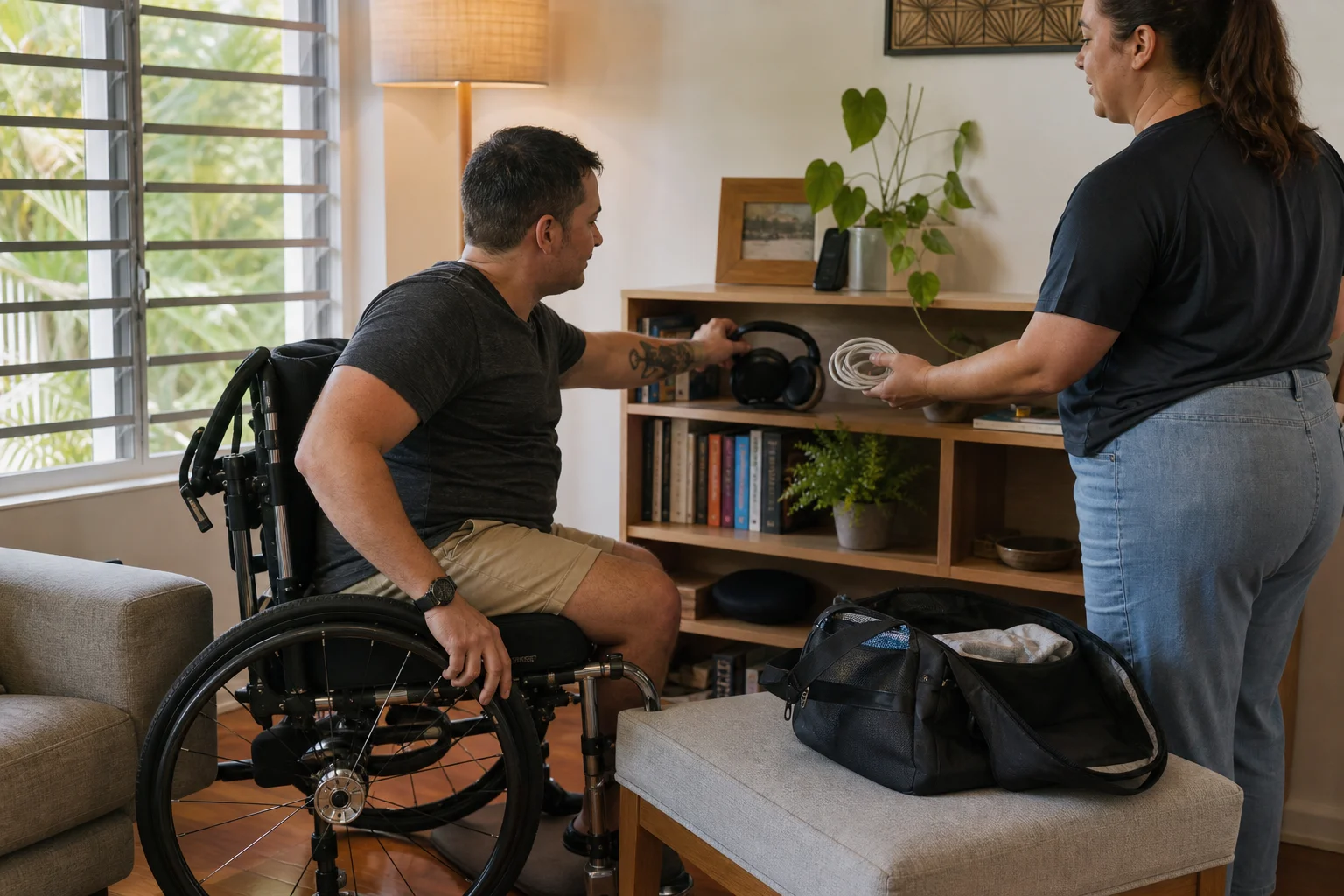
Make a list that is useful for you: communication device, charger, mobility equipment, glasses, personal items, keys and anything else you depend on. If a provider has held your money or property, ask for an account of what is being returned. The Commission's standards address protecting and accounting for participant property when a provider has access to it.
You might choose to check a charger with your device before packing it, or ask someone to help identify a missing item. Record anything outstanding and the person who will arrange its return. Keep private records separate from an open bag of belongings and agree how they will reach the right person.
Close the booking and review the experience
Ask when the final invoice will arrive and how to query an unexpected charge. If the stay ends earlier or later than planned, check the agreement and discuss the change before assuming what will be charged. The NDIA's service agreement guidance explains that agreements describe supports, costs, responsibilities and how changes or concerns are handled. A quote or provider recommendation cannot guarantee an NDIS funding decision.
Once you have settled back in, choose a time to reflect. What did you enjoy? Was anything uncomfortable or hard to communicate? Would you want a different arrangement next time? You can give feedback through speech, writing, pictures, a communication device or someone you choose. Keep any request specific so the provider can respond.
If you are concerned about the quality or safety of support, you can report an issue to the NDIS Commission. Speaking with the provider may help if you feel comfortable doing so. You can seek help with a complaint without waiting for another booking.
Discuss your return plan with Tibii QLD
Explore Tibii's respite service information and North Brisbane respite page, then contact the Banyo team with your proposed dates, access needs and usual support arrangements. Ask how departure, information sharing and your next support would be coordinated. The team can discuss service fit and what would need to be confirmed for your circumstances.
Fact checked 6 October 2026. Check current official guidance and your own plan before making a funding decision.
Back to Tibii Blog | Contact Tibii — 1300 736 731